

Talk to our team
Speak to a specialist about a guided engagement for your organisation.
Talk to our teamSee how it worksFrom the hub
Guides, webinars and research to help you build better job architecture
Browse all resourcesSubscribe for updatesSpeak to a specialist about a guided engagement for your organisation.
Talk to our teamSee how it worksGuides, webinars and research to help you build better job architecture
Browse all resourcesSubscribe for updatesWith a growing trend towards pay transparency, and the introduction of transparency legislation around the world, it’s natural that many organisations will have concerns about the potential drawbacks.
However, it’s important for companies to embrace pay transparency and the benefits it can bring. In this article, we’ll outline the numerous benefits of introducing pay transparency for employers and employees alike.
Equal pay legislation has been in place for decades across Europe and North America, but the issue of gender pay inequality persists. In the US for example, women earned an average of 82% of men’s earnings, according to Pew stats.
Pay transparency (also known as salary transparency) aims to help address gender pay gaps by removing the secrecy that has traditionally existed around pay and rewards. If organisations are transparent about pay, it makes it easier to identify and challenge gender pay gaps.
Secrecy around pay has become the norm over the years, and some employers may be concerned that a more open approach will lead to jealousy and resentment amongst employees.
For some employers, there will be concerns that their wage bills will increase, with employees more likely to ask for increased pay when they can compare their pay with that of other employees.
There is also a lot of work involved in implementing pay transparency, as explained by Joel Gascoigne, CEO and Co-founder at social media tech company Buffer:
“Salary transparency, along with other types of transparency, does inherently create extra work for us. The work in adhering to salary transparency, including our formula and the communication required to guide people through how it works, is not insignificant.”
While these are understandable concerns, the benefits of introducing pay transparency outweigh the potential drawbacks. Indeed, some studies have shown that pay secrecy negatively impacts performance.
Pay transparency has been shown to reduce pay gaps for the simple reason that, without secrecy around pay, employers are compelled to scrutinise their pay practices and structures to identify and address inequality.
In addition, when current or potential new employees know how their pay compares with others, they’re more likely to bring up these inequalities and put pressure on employers.
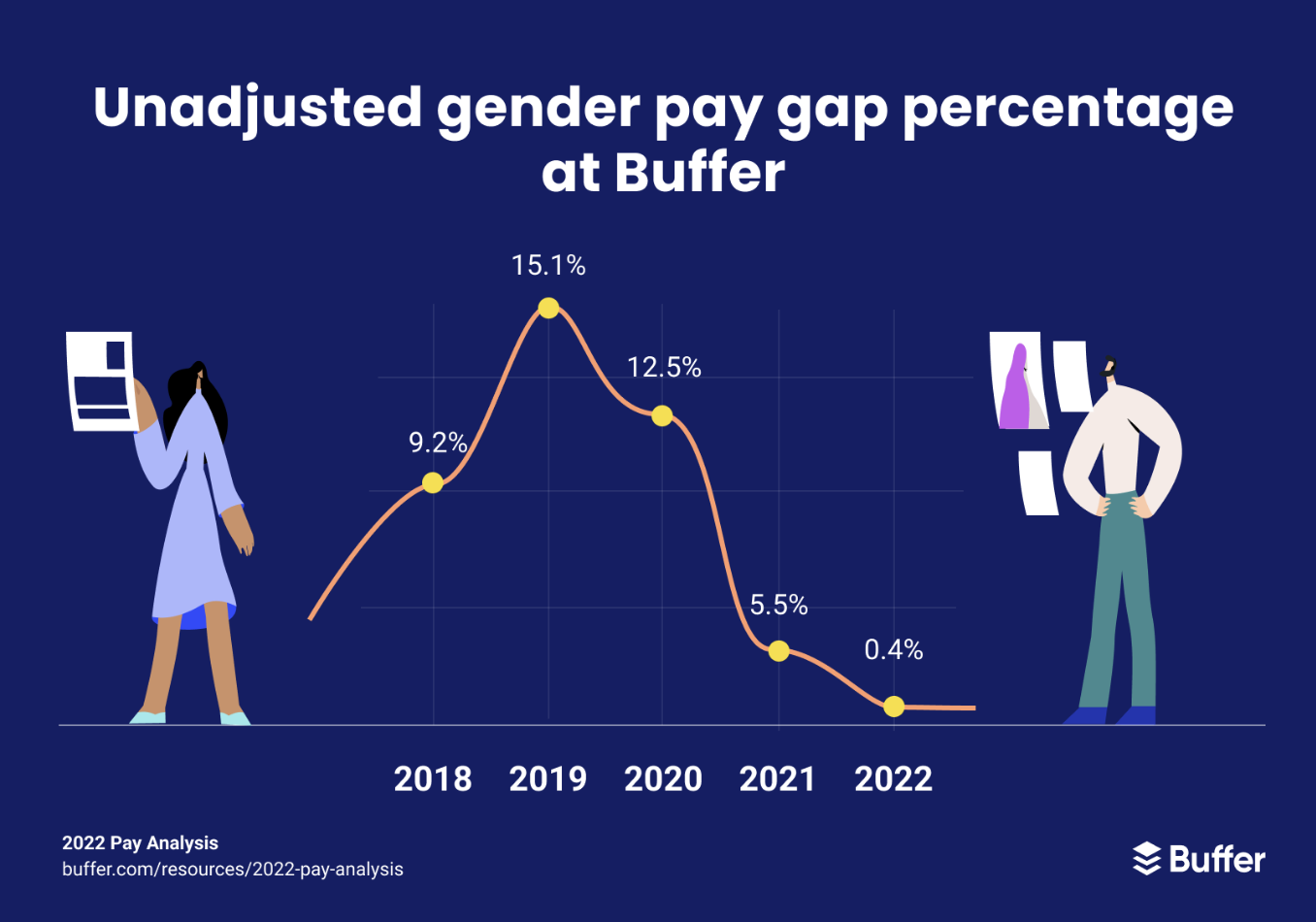
One example of pay transparency comes from Buffer, which introduced this as a policy a decade ago. As part of its transparency policy, the company doesn’t have salary negotiations, and publishes its salary and gender pay gap data annually.
As a result, the gender pay gap at Buffer has gradually reduced over the last few years, and was down to 0.4% in 2022.
For potential candidates, looking for new roles can be a frustrating process, made more so by the lack of visibility over potential salaries. This can deter potential candidates.
Conversely, transparency over salaries can make job adverts more attractive to potential candidates, more so in competitive industries.
A recent Gartner survey revealed the benefits of introducing pay transparency for recruitment. 64% of candidates surveyed said they are more likely to apply for roles that include compensation in the description, while 44% decided not to apply for jobs because salary information was not included.
Transparency helps to build a culture of honesty and openness, which is a healthy thing, improving trust in management. Buffer CEO Joel Gascoigne sees pay transparency and the trust it creates within an organisation as the foundation of great teamwork.
When employees understand how pay decisions are made, they are more likely to feel they are being treated fairly and equitably.
Pay transparency is increasingly becoming a legal requirement for organisations, with pay transparency legislation active around the world.
In general, pay transparency laws in the US centre around requirements for publishing salaries or salary ranges in job adverts.
For example, California requires all employers with 15 or more employees to include the pay scale for a position in any job posting. They must also maintain records of a job title and wage rate history for each employee for the duration of employment plus three years.
Some European countries, France and Sweden included, already have more stringent laws in place, while the EU Pay Transparency directive will become law by 2026 across the EU.
Trust in fairness around remuneration, and satisfaction with pay leads to higher employee engagement, and a more motivated workforce. HBR research suggests that pay transparency can lead to productivity benefits.
Transparent pay policies can also reduce turnover, as employees are less likely to seek opportunities elsewhere if they feel their compensation is fair.
A survey by PayScale on staff retention found that pay transparency produced a 30% increase in employee satisfaction and a 29% decrease in staff turnover rates.
A positive brand reputation impacts the company in a number of ways, from improved sales and customer loyalty, to being more attractive to potential candidates.
Companies that practice pay transparency are often viewed as more progressive and ethical, enhancing their reputation in the talent market. They also avoid the damage to brand reputation that can be caused by pay equity claims.
Pay transparency can lead to a better alignment of performance with rewards. When employees understand how their compensation is determined, and they have a clear idea of what they need to do to reach the next level, they have more motivation.
The benefits of introducing pay transparency can also include the removal of favouritism and discrimination, as pay must be based on measurable performance, qualifications, and experience.
While the introduction of more transparent policies around pay involves some effort, the benefits of pay transparency are numerous. Most importantly, these policies help to ensure that workers are paid fairly, while it positively affects the ability to attract and retain the best employees.
In today’s dynamic business environment, organisations face the challenge of managing ever-evolving job roles. The skills required for these roles are also constantly changing
By implementing job families, organisations can streamline talent development, simplify reward structures, enhance career progression, and foster a more strategic approach to workforce planning.
A job family framework not only simplifies the creation of clear career pathways for employees but also helps to identify skill gaps and facilitate learning programmes.
Job families provide an organisation with a simplified framework for managing pay and reward. The number of distinct reward structures will be reduced, making it easier to manage pay processes and communicate pay information. If a job evaluation process is in place, a job family structure makes it possible to evaluate the high-level roles within each family rather than evaluating each job in each location/team.
A job family structure can often facilitate better communication and transparency around pay. When you have a job family structure with standardised role profiles and job titles, you’re able to establish your grading and pay bandings at this higher level.
If roles are aligned to a job family structure, and each profile has a grade or level and a pay banding, it makes it much easier to look across your organisation and spot any pay equity issues.
Many organisations are looking at moving to a skills-based approach. To do this you need to have a clear understanding of the work being done on the ground and the skills needed to deliver this work.
Having a job family framework in place makes mapping out potential career paths for employees easier. Mapping job titles and skills into a job family framework makes it much easier to look laterally and develop cross-functional career paths.
Job families based on common skills and/or capabilities help facilitate the development of learning content. A key advantage is that Capability Academies can be aligned to job families, provided these have been categorised based on common skills and capabilities.
A job family framework helps simplify many compliance and reporting requirements, whether that is for equal pay, gender pay gap analysis or other compliance and legislative reporting requirements.
Aligning your jobs into job families is an enabler of better workforce planning and increased workforce agility. It provides you with the framework to consolidate all your skills and work in a structured format, that then allows you to identify commonalities of skills and work and increase your workforce agility.
To learn more, download our latest guide: Five Steps to Building Job Families
The EU Pay Transparency Directive is set to become law across member states in 2026, and the legislation will be significant for many businesses who are active in the EU.
The legislation is designed to combat the gender pay gap by forcing organisations to adjust their practices and become more transparent around pay.
The gender pay gap remains a significant issue in Europe. Women in the European Union continue to earn less than men with the average gender pay gap in the EU standing at 13%. This means that for every €1 a man earns, a women will make only €0.87.
The EU Pay Transparency Directive was agreed in June 2023 and is required to be built into the national laws of EU member states by 2026.
Key provisions of the EU Pay Transparency Directive include:
It’s important to note that this directive sets out the goals that EU countries must achieve. The individual EU member states will then devise their own laws to help them achieve these goals.
The EU Pay Transparency Directive sets out a range of minimum requirements for individual member stats to build into national laws. Some countries may go beyond these requirements, so it’s possible we’ll see some variation between member states.
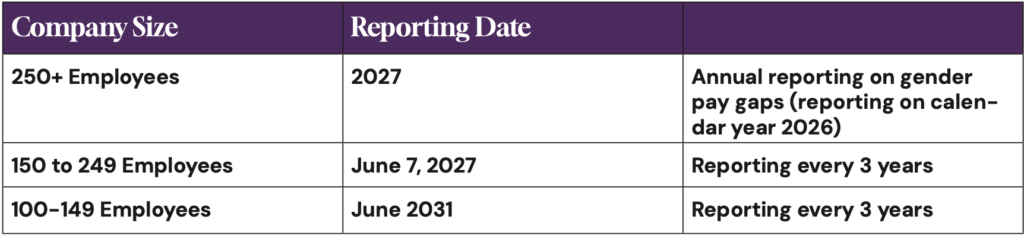
The EU Pay Transparency Directive applies to all public and private sector employers in the European Union but isn’t restricted to those with a physical presence in the EU.
All employers with 100 or more employees must provide detailed pay transparency information to employees, so a UK company with employees based in the EU would be required to comply.
Even if your business isn’t operating within the EU, pay transparency is an issue which may affect you anyway, thanks to the growing trend of pay transparency legislation being introduced all around the world.
The challenge for most organisations is not just how to keep up with the changes, but how to put in mechanisms and processes to ensure compliance globally, managing increasing changes and the nuances of regional variations.
Pay legislation varies around the world, though one common theme is the increased focus on transparency to address gender pay gaps.
Pay transparency legislation has been introduced in more than 25 countries around the world, with more in the pipeline. It’s a trend which will continue, and something organisations will need to have processes in place for, wherever they may operate.
The lesson here is that, even if your business isn’t directly affected by this new EU directive, the direction of travel is clear, and it’s likely that some form of pay transparency legislation will affect you at some point.
Organisations face several challenges around compliance, from a lack of consistency around job descriptions to the absence of a centralised job architecture, and levelling frameworks.
Businesses need to be taking steps to prepare and be proactive to meet the demands of the directive, but many are still yet to do this.
Research by The Conference Board found that 41% have yet to begin preparing for the directive, so there is plenty of work to do for some organisations.
The research also found that 55% of senior HR executives say that they are planning a single approach to pay transparency across their international operations, or already have such a process in place.
Just 30% of respondents will restrict pay transparency processes to their European businesses.
At the very core of pay transparency, and pay equity, is the ability to look across the organisation at the landscape of jobs, pay and reward, and make comparisons between the compensation for similar roles and dive deep into roles to ensure equal pay for equal work.
For many companies, this landscape is still a very chaotic, with individual teams and departments having their own job structures, titles and pay scales with little governance in place to manage and align.
To prepare for the EU Pay Transparency Directive, an essential first step is to put in place a comprehensive skills-based job architecture with roles organised into job families.
Organisations need the ability to fully analyse their job architecture and pay structures to have confidence in their pay equity position. The underlying structures, job evaluation processes and levelling frameworks must all be in place to support pay decisions.
Innovative organisations are investing in technologies that create automated, flexible, future-proofed job architectures that help govern job creation and pay bandings, manage scope creep, and provide instant access to job and pay inequalities.
There are several potential benefits from pay transparency policies, such as improved employee retention, and the ability to attract the best talent.
Pay transparency is popular with employees and those seeking new roles.
Given the current war for talent, companies should take notice of findings showing that 60% of US employees and 57% of UK employees would switch companies to one with more pay transparency.
However, research looking at the wage data relating to 100,000 academics in the US over two decades, found that increased pay transparency can result in a 20% reduction in the pay difference between individuals.
While some organisations may be paying increased attention to this issue thanks to the EU directive and related laws, it's important to think about how pay transparency can benefit your organisation.
In the world of organisational design, two interconnected concepts play critical roles: job architecture and position management. Whilst these terms are sometimes used interchangeably, they serve distinct yet complementary purposes in shaping how companies structure their workforce and manage their job data.
Understanding the link between these two approaches is vital for HR professionals and organisational leaders aiming to build efficient, adaptable, and strategically aligned workforces.
If you imagine the construction of a building – the job architecture would be the blueprint that outlines the overall structure. Whereas, position management would involve deciding where to place each brick.
A job architecture forms the backbone of an organisation's workforce structure. It provides a framework for defining and aligning jobs within an organisation based on the type of work performed. In its simplest form, a job architecture provides a mechanism to consolidate job titles into a consistent framework of job functions and job families, giving clarity and transparency on career levels and pay.
A robust job architecture is essential for effective position management. It provides the context and structure around where individual positions can be created, modified, and tracked. Without this overarching framework, position management can become chaotic and inconsistent, leading to inefficiencies and inequities across an organisation.
Position management, building upon the foundation laid by a job architecture, is the tactical, day-to-day process of organising and overseeing specific roles within an organisation. It involves creating, modifying, and tracking individual positions to ensure they align with the company's goals, budget, and operational needs.
The link between job architecture and position management becomes evident in several key areas:
A well-defined job architecture ensures that similar positions across different departments are treated equitably. This consistency is crucial for effective position management, allowing managers to create and modify roles that fit logically within an overall organisational structure.
The reward structures defined in a job architecture should guide position-specific decisions about pay, ensuring internal equity and external competitiveness. This is particularly important given the recent changes in legislation around pay equity and pay transparency.
A job architecture should ideally be linked to comprehensive skill and competency taxonomies or frameworks. These frameworks feed into position management, ensuring that each role is assigned the appropriate skills and competencies.
While a job architecture provides a stable framework, it should also allow for flexibility in position management. When new opportunities arise, organisations can quickly create or modify positions within the existing architecture, ensuring both responsiveness and structural integrity.
There are two key job documents that reflect the differences between job architecture and position management – job profiles and job descriptions. Job profiles are linked to an organisation’s job architecture and provide a broader, more generic overview of a role.
Job profiles focus on core elements common across all variations of a particular role, regardless of specific departments or teams. Job descriptions on the other hand are more specific and detailed documents that outline the requirements and expectations for a single position within the organisation. These are more likely to be used within position management to describe the specific requirements and expectations for a single position within the organisation.
In practice, HR professionals and line managers use position management tools and documents for operational purposes, managing their teams, planning for vacancies, and ensuring they have the right people in the right roles.
However, such day-to-day decisions are guided and supported by the strategic job architecture framework typically developed by internal or external Reward specialists.
For optimal results, organisations should integrate both job architecture and position management into their HR strategy
It can be difficult to know where to start with a job architecture. When faced with a chaotic picture of multiple job titles across various business areas and regions, the response can be to put this task into the “too hard” box and delay it for another year in the hope that it sorts itself out.
This can create issues and open organisations up to compliance risk, especially around pay equity and pay transparency, as well as slow down strategic people initiatives.
This is where having an agile job architecture proves invaluable. The ability to change and adapt at pace, ensures HR and Reward professionals are working more seamlessly together to create a more agile, compliance-focused and future-proofed organisation.
Job profiles and job descriptions are two key pieces of content for defining and managing positions within a company.
These terms are sometimes used interchangeably, but they serve distinct purposes and contain different levels of detail.
Understanding the differences between job profiles and job descriptions is essential for effective workforce planning, compensation management, and career development.
A job profile is a broader, more generic overview of a role within an organisation. It focuses on the core elements common across all variations of a particular position, regardless of specific departments or teams.
Generic description of the role
Core Responsibilities:
Skills and Competencies:
A job description is a more specific and detailed document that outlines the requirements and expectations for a single position within the organisation.
It is always connected to a particular job profile to ensure consistency in levelling and salary ranges.
Recruitment and selection is a key use case, with job descriptions often forming the basis for job advert content and often used to design selection processes and evaluate candidates.
Job descriptions also serve as a basis for setting goals and evaluating employee performance. They ensure clear communication of job expectations and requirements.
A job profile provides a broad, generic overview of a role for organisational planning and reward strategies, while a job description offers a more tailored outline of a role for hiring, performance management, and day-to-day guidance for employees.
Pay transparency legislation is moving up the equality agenda and gaining traction globally. Ultimately, this legislation is about organisations putting in measures that require them to be open about the compensation they provide, for current and prospective employees.
Pay transparency measures that are covered by legislation include:
Although legislative requirements may differ in each location, fundamentally, what they have one overall aim in common; achieving equal pay for equal work for employees from under-represented groups.
There are global organisations that are ahead of the curve and have been taking pay transparency further than the legislation, such as Buffer who, since 2013, has published all employee salaries online.
According to Census Bureau estimates, in the U.S. women are paid 82 cents for every dollar paid to a man. One key measure being used to try and address this disparity is pay transparency.
There are currently 10 U.S. states that have already introduced pay transparency legislation, with many others in the process of doing so.
New York State's bill came into effect in September 2023, and all employers with 4 employees or more are now required to include the compensation, or a range of compensation, when advertising for a job, promotion or transfer.
California's Equal Pay Act has been in place since 2016 and prevents employers from asking about candidates' previous salaries. The state introduced additional legislation in 2023 that requires all employers with at least 15 workers to include the hourly rate or salary range on all job postings.
Over 1 in 4 U.S. employees are now covered by pay transparency legislation with that number due to rapidly increase over the next few years.
E.U. Pay Transparency Directive
With the E.U. gender pay gap at around 13%, the EU Pay Transparency Directive was approved in June 2023 to strengthen the application of the principle of equal pay for equal work, or work of equal value, between men and women through pay transparency and enforcement mechanisms.
The directive provides:
E.U. member states must transpose the Directive into national law by June 2026.
Although legislative requirements may differ, fundamentally, what they have in common is one overall aim; achieving equal pay for equal work for employees from under-represented groups.
The situation around pay transparency in the U.K. is less certain than the U.S. or the EU.
In the UK, companies with more than 250 employees are already obliged to disclose pay information under the Equality Act 2010 and report annually on their gender pay gap, i.e. the difference between the average (mean or median) earnings of men and women across a workforce.
In March 2022, a pilot scheme was launched by the UK government to tackle pay transparency. Those taking part in the pilot listed salary details on job adverts and purposefully didn’t ask about salary history during recruitment.
On 17 May 2024, it was confirmed that work on the UK pay transparency pilot scheme had been paused pending further research, and to analyse the impact of pay transparency around the world.
Therefore, whilst the UK does have established gender pay reporting, it is currently lagging behind much of the world in terms of pay transparency legislation.
However, an increased global focus on increased pay transparency, combined with a new Labour government committed to closing “gender, ethnicity and disability pay gaps”, makes it more likely that implementing legislation in the UK around pay transparency will move up the agenda.
UK organisations will need to consider their approach if they operate in territories that already have pay transparency legislation. There is also nothing stopping organisations from going above and beyond the current legislative position in the U.K. to prepare for any future changes.
Pay transparency is popular with employees and those seeking new roles. Given the current war for talent, companies should take notice of findings showing that 60% of U.S.employees and 57% of U.K. employees would switch companies to one with more pay transparency. However, research looking at the wage data relating to 100,000 academics in the U.S. over two decades, found that increased pay transparency can result in a 20% reduction in the pay difference between individuals.
Harvard Business Review recently shared some interesting research on the often, unintended impacts that a pay transparency policy can have in an organisation:
These additional, non-monetary benefits have been termed "idiosyncratic deals" or "i-deals" and the research further found that these i-deals were more likely to be agreed by supervisors as a way of retaining key talent. So, base pay may be fairer but inequality may still exist in the additional rewards that some employees are able to negotiate for themselves.
Another fear that organisations might have is that by publicising their salaries, competitors could poach key talent with higher offers. This is something that Buffer feared but say they haven’t experienced so far.
At the very core of pay transparency, and pay equity, is the ability to look across the organisation at the landscape of jobs, pay and reward, and make comparisons between the compensation for similar roles and dive deep into roles to ensure equal pay for equal work.
For many companies this landscape is still a very chaotic, with individual teams and departments having their own job structures, titles and pay scales with little governance in place to manage and align.
To prepare for pay transparency an essential first step is to put in place a comprehensive skills-based job architecture with roles organised into job families.
Organisations need the ability to fully analyse their job architecture and pay structures in order to have confidence in their pay equity position. The underlying structures, job evaluation processes and levelling frameworks must all be in place to support pay decisions.
Innovative organisations are investing in technologies that create automate simple, flexible, future-proofed job architectures that help govern job creation and pay bandings, manage scope creep and provide instant access to job and pay inequalities.
Organisations are increasingly looking to adopt a skills-based approach to remain competitive in a rapidly evolving business landscape, which focuses on identifying, developing, and utilising specific skills across the organisation to improve performance and adaptability.
This shift is driven by the need to address the dynamic nature of work. Jobs are constantly evolving, as are market demands and customer expectations. As a result, identifying the specific skills required for each job, while ensuring information is governed and kept up-to-date, is critical.
A skills-first focus on jobs and work allows organisations to move employees around to where their skills are most needed. It also enables the development of targeted skills training programmes. Lastly, it helps identify and proactively address any gaps that may hold an organisation back through the use of a skills-based hiring approach. This is essential for developing the organisational agility that is now required.
Research by Deloitte underlines the clear benefits of the shift to skills, both in terms of better business results and an improved employee experience. Organisations that had embedded a skills-based approach were found to be:
A chaotic job architecture, where roles haven’t been organised into job families, can significantly hinder the transition to skills.
From our experience working, the main barrier to change for many organisations is a chaotic job architecture and an absence of skills-based job families
A job architecture forms the building blocks of an organisation. It provides a framework for defining and aligning jobs within an organisation. A skills based job architecture is based on the skills required for each role, rather than traditional job titles or hierarchies.
The key components and characteristics of a skills-based job architecture are:
By grouping jobs into job families, you can more easily identify skills across the organisation. It also helps systematically identify and categorise requirements. In truth, without a job architecture based on skills, making the shift to skills will be an uphill battle.
One of the biggest challenges in moving to a skills-based approach is identifying and consolidating the skills required
A skills architecture provides a structured skills framework to consolidate, capture, and manage skills. When linked to a consistent skills framework or taxonomy, you can better understand the skills landscape across the entire organisation.
Aligning your jobs into a skills job architecture also provides a framework for workforce planning and enabling organisational agility. If, for example, you are looking to see where skills may exist in the organisation to support strategic initiatives or if you want to look at deploying skills from a reorganisation, your skills-based architecture allows you to see where these skills are so you can more rapidly deploy and relocate employees.
In truth, without a skills-based job architecture, moving to a skills-based approach will be an uphill battle
There is a growing trend among organisations to adopt a skills-based approach to stay competitive. A skills-based approach enables organisations to deploy employees based on their skills, develop targeted training programmes and address skills gaps proactively.
A major barrier to this transition is a chaotic job structure, implementing a skills-based job architecture and a job family framework will be a critical first step towards controlling the chaos and moving to a skills-based approach.
Centralising job data is critical for effective governance and robust risk management in local government. Without a unified approach, organisations encounter challenges such as inconsistent job descriptions, difficulties when assessing pay equity, and the risks associated with outdated or inaccurate job information.
Research has highlighted that increased data visibility is often cited as one of the main ways the public sector can become more efficient. Centralising data means establishing a cohesive, comprehensive, and readily accessible repository of job content, which is vital for ensuring compliance, fairness, and improving operational efficiency.
We explore the current challenges organisations face and highlight the advantages of centralising job data.
There are some common issues around job data and job content that we encounter when starting to work with public sector organisations:
Time wasted finding job content
We find that, across most local authorities, job descriptions are stored in a wide variety of locations. There may be some held centrally but there will be others on individual desktops or in team files. There is no central place where job content is stored that is easily accessible by whoever needs it.
This leads to time wasted trying to find job content and often a duplication of effort; a typical example is a manager recreating a job description because an already-created version can't be found. This lack of centralisation also makes governance and locating job content for pay equity analysis extremely challenging and time-consuming.
Inconsistent formats
A common challenge for local government is that there isn’t a consistent format for job descriptions. Often the template has changed over time and there are wide variations – some ranging from 24 pages long, others two pages long. This results in inconsistent job content. Different formats for job content hinder the ability to perform cross-departmental analyses, for example when assessing pay equity for similar job roles that sit in different teams.
Job content not being regularly updated
Job descriptions need to be reviewed and updated regularly to ensure they reflect current roles and responsibilities, especially for use as pay equity comparators. This task is often difficult to manage without a central repository where all job content is stored and easily accessible. Job content will only be updated when a vacancy arises and, therefore, may not accurately reflect the job being done on the ground.
Lack of audit trails
Without a centralised mechanism to capture changes to job descriptions, tracking the evolution of roles becomes challenging. When job description reviews and approvals are conducted manually via email, there will be no clear record of changes made, who approved them, or when they were implemented. A lack of accurate record keeping is often cited as a key issue in pay equity cases.
Different formats for job content hinder the ability to perform cross-departmental analyses. For example, assessing pay equity for similar job roles sitting in different teams.
Outdated versions of job content being used
In the absence of a centralised repository, it can be unclear which version of a job description is the latest. This ambiguity can leave an organisation exposed to potential risks, such as claims that outdated or inaccurate job descriptions were used for job evaluation. Centralising job data helps ensures that there is always a single, up-to-date version of each job description or role profile available, resulting in good governance.
The way to mitigate these risks is to bring all your disparate job content together in one centralised location and then implement a process around how job content is updated and managed going forward.
This will help ensure that job content is up-to-date, accessible, consistent and fit-for-purpose for the reporting that is required for all local authorities.
Key elements to consider for any new process are:
Centralising job data is crucial for risk management and good governance. It ensures consistent and accurate job content, facilitates equal pay analyses, maintains an audit trail of changes and provides clarity on the latest versions of job content.
By addressing these critical aspects, local authorities can reduce the risks associated with decentralised job content management and ensure compliance with regulatory requirements. Investing in a centralised job data system is not just a matter of efficiency, it is a strategic imperative for sustainable organisational success in the public sector.
To learn more about controlling the job data chaos, why not join one of our webinars.
Many organisations are making fundamental shifts in the way they hire and retain employees, namely a more focused approach to shifting to skills. This is having a knock-on effect on a range of areas across the business, including job family frameworks. Mercer’s 2024 Global Talent Trends Report states that 51% of organisations are focusing on employee up/re-skilling, which is driven by a need to increase productivity, retention and employee wellbeing.
As part of this drive, 37% of organisations in Mercer’s survey felt that a simplified organisational structure was also a priority, which is where the challenge ultimately lies. By their very nature, large organisations have complex skills frameworks that are proving a real challenge in the shift to skills or to simplify job structures, job architecture or job family frameworks.
The Burning Glass Institute’s report on skills-based hiring highlighted that focusing on skills was a positive step in theory, but, in practice, something quite different. For those organisations that dropped requirements from jobs, 18% fell back to hiring patterns after an initial burst of progress.
Becoming a skills-based organisation needs more than intent, it needs structure and planning.
As Burning Glass states, "Without rethinking underlying systems and practices, changes don’t stick."
Mapping out clear career paths is one key element to retaining employees, it ensures people can more easily identify potential next steps up and around the organisation. Employees who are clear about the opportunities that are available to them are more likely to stay with your organisation rather than explore opportunities elsewhere.
From the work we have done helping organisations define career paths, we’ve found that a critical first step is to establish a comprehensive job family framework. Having this in place will help map out career paths for employees more clearly and in a way that is simple and accessible.
A job family is a group of related jobs within an organisation that share similar skill sets and nature of work. The essential nature of the activities, and the basic skills used, will be similar for all roles within a job family. Although, the level of responsibility the skills required to do the work, and the scope of the role, may be different.
The job titles for each role within a job family should be chosen to reflect these differences in scope and responsibility, whilst still utilising a common job titling language to make clear which job family a job sits within.
Job families are often grouped within “job family groups” or “job functions” – these are higher-level categories of jobs, which will include multiple job families. Examples of job functions would be Finance or General Administration.
The overall structure of job families in an organisation makes up a job family framework.
Introducing job families can help consolidate, review, cleanse and streamline your job data and job content. Once a job family framework is in place, it provides a solid foundation for many key organisational processes including establishing career paths.
A job family framework helps simplify career paths within a job family
One of the primary advantages of implementing a job family framework is to simplify career path mapping for employees. A well-designed job family will have responsibilities and requirements for each role outlined in a role profile. Employees will be able to easily see how the responsibilities and requirements for other roles in their job family differ from those of the role that they are currently in. They can use this information to plan their own development and work towards the skills requirements for any roles they are aiming for.
A job family framework helps simplify career paths across different job families
A job family framework should be underpinned by a consistent levelling structure. If this is the case, then potential career paths can be mapped out laterally and vertically across job families - where similar skillsets make lateral moves a possibility.
Instead of navigating a large organisational-wide web of different job titles and responsibilities, employees can use a job family framework to understand potential career paths involving other job families. Mapping out these potential lateral moves can help employees take control of their own career development.
Aside from mapping career paths, job families have many other benefits including:
Find out more about job families by signing up for one of our webinars.
With legislation on the rise across many countries, now is the time for organisations to get on the front foot when it comes to pay transparency, but when faced with the challenge of dealing with complex organisational structures, it can be a daunting task.
There are a lot of moving parts for any large organisation when it comes to compliance. It's not just about keeping up with legislative changes but also putting in place robust and agile job data structures, mechanisms and processes to enable effective global compliance, whilst managing the nuances of regional variations.
“The pay transparency movement will continue to spread through regulation, but also through changing workforce expectations. We’re in an environment where employees are rightly demanding fairness, clarity and transparency in how they are paid.” Aon
There are now 10 US states with pay transparency legislation in place, with a further thirteen in the process of making it law.
Using the state of California as an example, all employers, with 15 or more employees, must include the pay scale for a position in any job posting. They must also maintain records of a job title and wage rate history for each employee for the duration of employment plus three years.
26% of the US labour force is covered by pay transparency laws, that's over 44 million people
In addition, there are requirements for pay gap reporting, a ban on asking job applicants about their salary histories and relying on an applicant's salary history to determine compensation levels.
In 2023, the EU Parliament voted to adopt a Directive. This is in a drive to close the gender pay gap of around 13%. EU Member States have until June 2026 to transpose the Directive into national law.
The Directive also makes pay gap reporting mandatory for organisations over a certain size; it also goes one step further, requiring organisations to look at deeper analysis and establish a corrective action plan where there is a pay gap of more than 5%.
Job applicants will have the right to receive information on the initial pay level/range for any advertised position and employers cannot ask about previous or current pay.
The EU Directive won’t directly apply in the UK. However, if a company is registered in the UK, or anywhere else non-EU, but has more than 100 employees based in EU member states, they will need to comply with the legislation and reporting requirements for that location.
The UK also has its own gender pay gap reporting process for organisations with more than 250 employees.
At the very core of pay transparency, and pay fairness, is job data. Having the job data for your whole organisation mapped within a well-structured job architecture, with a consistent levelling framework across job families, will give you the ability to look across your landscape of jobs, pay and reward, in order to make comparisons between similar roles and ensure equal pay for equal work.
However, for some companies job data can be chaotic, inconsistent and unstructured. It can exist as a long list of job titles and associated job codes that have developed organically as the organisation has grown, changed, merged or acquired. Where an organisation does have a job structure in place, it can easily become difficult to govern and manage and therefore out-of-date.
In both scenarios, there can be a state of chaos – hundreds of job titles, many just slight variations of others; job levels all over the place; and inconsistencies in salary ranges across roles, business areas and regions. A disordered job structure creates a shaky foundation, which makes compliance with pay transparency legislation difficult.
From a Job data perspective, it’s never been more important to get your house in order. Regaining control through a dynamic Job Architecture, and structured frameworks through Job Families, will give greater transparency and control over pay and grading.
Although legislative requirements may differ in each location, fundamentally, they have one overall aim in common; achieving equal pay for equal work for employees from under-represented groups.