We're at Unleash, Paris, 20-22 October 2026See us there →
person_celebrateRolemapper Quick Win

What is Job Description Software and Why Do Organisations Need It?

Job description software turns static job descriptions into structured, reliable data that drives consistency, fairness and efficiency across the business.

Trusted by leading organisations worldwide

Siemens
BBC
Comcast
Zoom
Flutter
Download the Guide

Job Architecture in Action

How a dynamic architecture supports AI-enabled work, skills-based strategies and pay transparency
Why a job architecture is now essential infrastructure, not a background HR structure
The role technology plays in keeping job architecture accurate, governed and up to date
person_celebrate RoleMapper Quick Win

Job Description Software in 3 Mins

What is job description software?

Job descriptions sit at the centre of every workforce decision — from hiring and pay to planning and progression. But managing them effectively across a growing organisation is a challenge.

Many companies still rely on Word files, spreadsheets and shared drives. The result is inconsistency, duplication and risk — job data that’s out of date, hard to find and disconnected from the systems that depend on it.

Job description software changes that. It turns static job descriptions into structured, reliable data that drives consistency, fairness and efficiency across the business.

Modern platforms such as RoleMapper bring this process to life — combining automation, governance and AI to help organisations create and manage job descriptions with accuracy and confidence.

Job description software is a central system for creating, maintaining and governing job descriptions at scale.

It provides a single source of truth for job data, ensuring that every description — from entry-level to executive — is accurate, consistent and aligned with organisational standards.

With the right software, organisations can:

  • Create job descriptions quickly and consistently

  • Apply standard templates, language and governance

  • Track ownership, approvals and version history

  • Link roles to job families, levels and skills

  • Integrate job data into HR, reward and planning systems

This allows HR and business leaders to manage job information proactively, not reactively — ensuring accuracy and alignment across every people process.

The Cost of Chaos

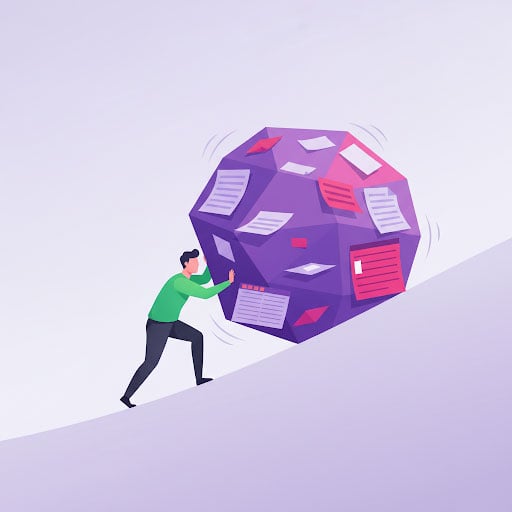
Outdated tools create inconsistencies, bias and governance risks.

Fragmented and outdated job data

Solution: a structured, agile job architecture

We bring structure to your job data and skills chaos, making decisions around performance and progression more consistent, transparent and fair.

Misaligned, manual job levelling

Solution: job levelling integrated into job creation workflows

The defensibility of a point-factor methodology with the simplicity of a levelling framework. Built against global legislation, equal pay case law and bias research from day one.

Disconnected systems with poor pay governance

Solution: streamlined control of your full job architecture

RoleMapper integrates with your existing HR systems and adapts to your processes — no need to overhaul how teams work.

Learn more ↓

"RoleMapper saves us a ton of time and brings the governance we need as a comp function."

Todd Reeves - Chief People Officer, Zoom

Job descriptions that are accurate, consistent and compensation-ready

Dynamically create and maintain your job descriptions as your organisation and the market evolves. Level-aligned, skills-based and connected to your job architecture.

  1. 1

    Start with what you have, however scattered

    Your existing job descriptions, levels and skills data are mapped against our data model and validated against external market data.

  2. 2

    Create a standardised, level-aligned, skills-based job catalogue

    Job descriptions and profiles created with proficiency levels defined and content aligned to your levelling and evaluation framework.

  3. 3

    Your stakeholders review and sign off in one place

    Regional workflows, configurable permissions and in-platform collaboration replace scattered email threads.

wand_stars

Let RoleMapper do the heavy lifting

From scattered job content to a governed, living job catalogue. Here's how it works.

Learn more

Benefits of job description software

Implementing job description software delivers measurable improvements in accuracy, speed and compliance across the business.

Without a structured approach, managing job descriptions can quickly become complex and time-consuming.

Common challenges include:

  • Inconsistency: The same role described differently across departments

  • Fragmentation: Documents stored in multiple locations, with no single source of truth

  • Manual updates: Hours spent rewriting or tracking versions

  • Compliance risk: Limited visibility of pay equity or regulatory alignment

  • Data gaps: No reliable view of how roles connect to job families or levels

These problems grow as organisations expand, restructure or adopt new HR systems.
Without visibility and control, HR teams struggle to ensure fairness, maintain compliance or make confident, data-driven decisions.

Job description software — like RoleMapper — eliminates these risks by embedding governance, automation and standardisation into every stage of the process.
Modern platforms use automation, AI and smart workflows to make job description management simpler and more consistent.

A typical system enables organisations to:

  • Create – Build and update job descriptions using templates and pre-approved language.

  • Collaborate – Enable HR, reward and business leaders to review and edit in one secure workspace.

  • Govern – Track versions, ownership and approvals automatically.

  • Analyse – Search, report and extract insights to support pay, performance and workforce planning.

  • Integrate – Connect job data to HRIS, pay and skills systems for full alignment.

The result is a live, connected library of roles that evolves with the organisation — accurate, compliant and ready for change.
Implementing job description software delivers measurable improvements across accuracy, speed and compliance.

  • Efficiency: Reduce creation and update time from hours to minutes.

  • Consistency: Apply one format, language and structure across every role.

  • Governance: Build in approval workflows and audit trails.

  • Compliance: Demonstrate transparency in pay and progression.

  • Visibility: Access searchable, standardised job data in one place.

  • Agility: Update and align roles quickly as structures or skills change.

See how RoleMapper makes this easy ↓

Design, manage, and scale your organisational structures—without spreadsheets or consultants.

✓

See it in action

A live walkthrough of the Job Architecture Data Transformation Service using real-world examples.

✓

Understand the outputs

See the job profiles, job descriptions and architecture structures we deliver and how they connect to your wider people strategy.

✓

Get a clear next step

Leave with a practical view of what a project would look like for your organisation, timeline and all.

Book a DemoBook a 15-Minute Demo

Trusted By

Siemens
BBC
Comcast
Zoom
Flutter

FAQs

RoleMapper Resources

person_celebrate

Thought Leadership Hub

Everything you need to go further. Guides and insights to support your Job Levelling and Job Architecture journey.

Job Architecture
Job Levelling & Evaluation
Skills
Job Descriptions
person_celebrateRoleMapper Quick Win

Why is Job Architecture important?

Creating and maintaining a dynamic, future-proofed job architecture is a strategic imperative for all organisations.

Read more
person_celebrateRoleMapper Quick Win

Why is Job Levelling important?

We explore the benefits of job levelling and the different methods that can be used.

Read more
person_celebrateRoleMapper Quick Win

Building a Skills Framework for a Transparent, Fair Organisation

A skills framework is a structured way of defining the capabilities required to perform work and deliver outcomes across an organisation.

Read more
person_celebrateRoleMapper Quick Win

What is Job Description Software?

Job descriptions sit at the centre of every workforce decision — from hiring and pay to planning and progression. But managing them effectively across a growing organisation is a challenge.

Read more

Further Reading

Explore related guides and insights on job architecture, job levelling and workforce planning.

GUIDE

The Job Architecture Guide

Build a job architecture that lasts. Download the guide.

Download now
ON-DEMAND

Masterclass

Job architecture in practice. Watch the on-demand masterclass.

Watch now
BLOG

Our Thinking

Why job architecture transformation should take weeks, not years.

Read more
VIDEO

Explainer

See exactly how our Job Architecture Data Transformation Service works.

Watch now
CASE STUDY

Zoom Case Study

How we transformed Zoom's job architecture. Fast.

See what's on