Job architecture rarely grabs headlines. Yet right now, it’s quietly becoming one of the most important foundations organisations rely on to navigate change.
Global expansion, new pay transparency requirements, growing expectations around equity, mobility and skills, not forgetting rapid advances in automation and AI, are key forces that are reshaping how work is designed. These requirements are now exposing the limitations around static job architectures, that were designed for a very different world.
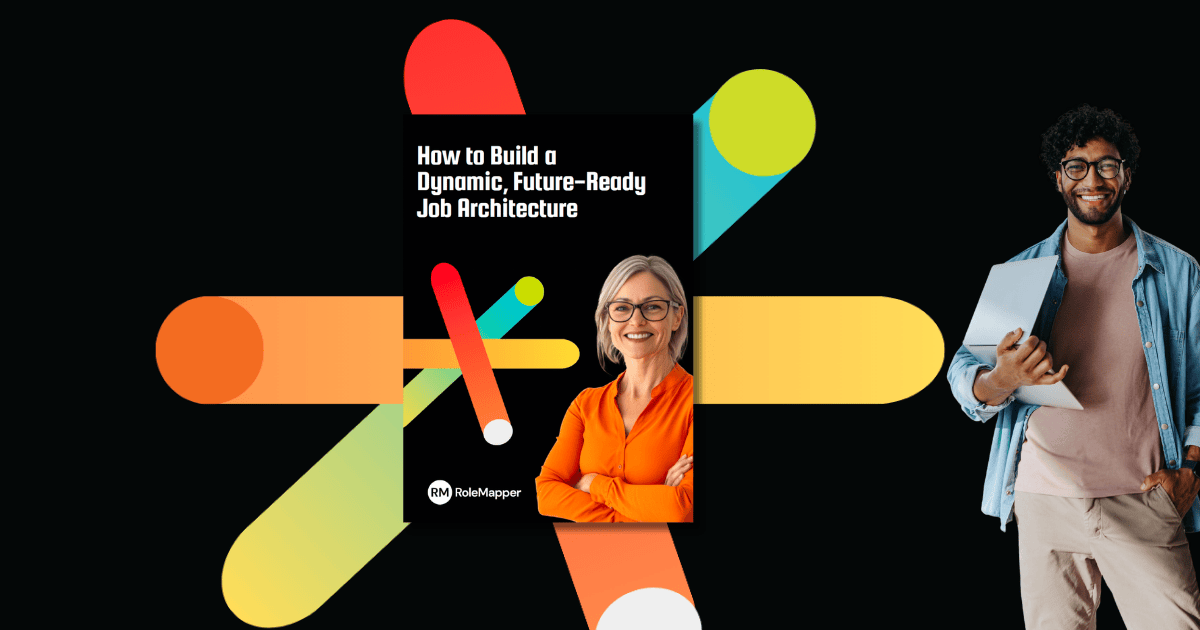
Our new guide, How to Build a Dynamic, Future‑Ready Job Architecture, focuses on how jobs, levels, work and skills fit together, and what it really takes to make an agile job architecture work in practice and fit for the future of work.
Many organisations technically have a job architecture. But in reality, it has often evolved organically over time, shaped by restructures, acquisitions, regional changes and legacy systems.
Common challenges with a static job architecture:
As regulatory scrutiny increases and employees demand greater transparency, these cracks become harder to ignore. Without a clear, trusted view of work, organisations struggle to demonstrate fairness, enable mobility or plan for the future.
A modern job architecture can’t just be a static framework. It has to keep up with how work actually changes.
In the guide, we make a clear distinction between static and dynamic approaches.
A static job architecture is treated as a one‑off project: designed, documented, implemented and slowly allowed to drift out of date.
In contrast, a dynamic job architecture is a living system. It’s designed to evolve as roles change, skills shift and new ways of working emerge, while still providing the stability needed for governance, pay equity and compliance.
Getting this balance right between flexibility and consistency is what makes an organisation truly future‑ready.
One of the most common reasons job architectures fail is that different elements are defined in isolation. Jobs sit in one place, levels in another, skills somewhere else entirely.
In this guide, we break job architecture down into four interconnected components that need to work together as a system:
A clear job structure creates a shared language for roles across the organisation. Consistent job families, titles and codes make it possible to compare roles, benchmark reliably and support movement across teams.
Value data provides the foundation for fair and defensible decisions. Clear levels, career tracks and grading structures ensure that “equal work for equal pay” is more than a principle—it’s something you can demonstrate.
Work connects architecture to reality. By breaking roles down into responsibilities, tasks and outcomes, organisations gain visibility into how value is created, where effort is spent and where work may need redesigning.
Structured skills data turns static role definitions into a flexible capability model. It supports skills‑based planning, internal mobility, learning strategy and future workforce decisions.
When these four components are connected, job architecture becomes a powerful enabler rather than an administrative burden.
A recurring theme throughout the guide is the need to move away from documents and spreadsheets towards structured, connected data.
This shift is what allows organisations to:
Most importantly, it makes job architecture sustainable. Instead of periodic clean‑up exercises, organisations can maintain clarity and consistency as part of everyday operations.
The final section of the guide explains how RoleMapper applies these principles in practice.
We bring jobs, value, work and skills together into a single, connected data model—using AI to reduce manual effort, surface insight and support ongoing change. With governance, workflows and audit trails built in, organisations can evolve their architecture deliberately and transparently, rather than letting it drift.
The result isn’t a static framework, but an organisational capability: one that supports skills‑based working, fair pay, credible careers and confident decision‑making as the nature of work continues to change.
Job architecture is no longer a background structure. It’s a core infrastructure.
If you’re rethinking how jobs, levels, work and skills fit together in your organisation, our new guide will help you understand:
Download How to Build a Dynamic, Future‑Ready Job Architecture


Role Mapper Technologies Ltd
Kings Wharf, Exeter
United Kingdom
© 2026 RoleMapper. All rights reserved.